
In this article you will find:
Scalp Cooling
Search
What is Scalp Cooling
Scalp cooling is a proven approach to reduce chemotherapy-induced alopecia that has been used successfully by thousands of patients worldwide for decades. Reduced temperature results in a decreased blood flow to the scalp area so that less chemotherapy reaches the hair cells. Therefore, hair cells are not exposed to the full dose of chemotherapy and may be able to survive the chemotherapy treatment. As a result, hair is less likely to fall out.
How Scalp Cooling Works
Two physiologic reactions occur during scalp cooling:
1. Reduced blood flow
Vasoconstriction in the scalp area limits the amount of chemotherapy agent delivered to the hair follicles.
2. Reduced metabolism
Lower scalp temperature decreases the reaction rate causing normal cellular activity in the localized scalp area to slow dramatically.
With these two reactions the follicles absorb fewer chemotherapy agents and hair loss is significantly reduced.

Scalp Cooling Treatment Cycle
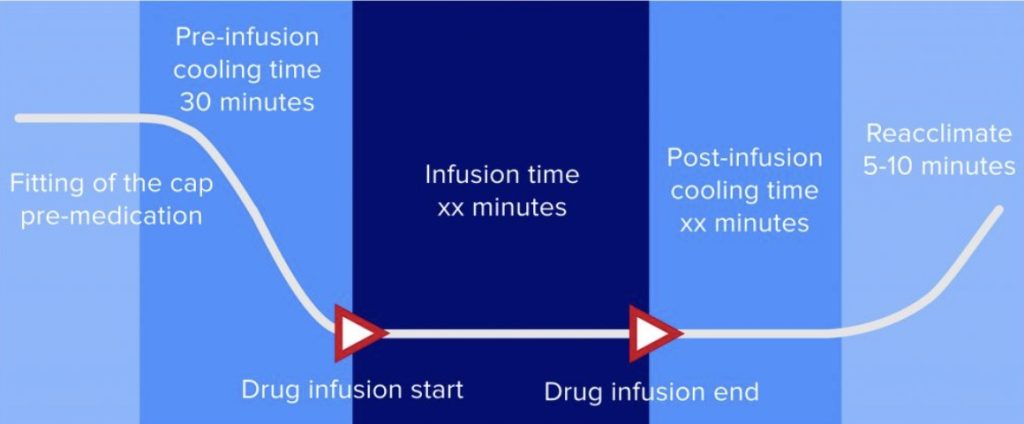
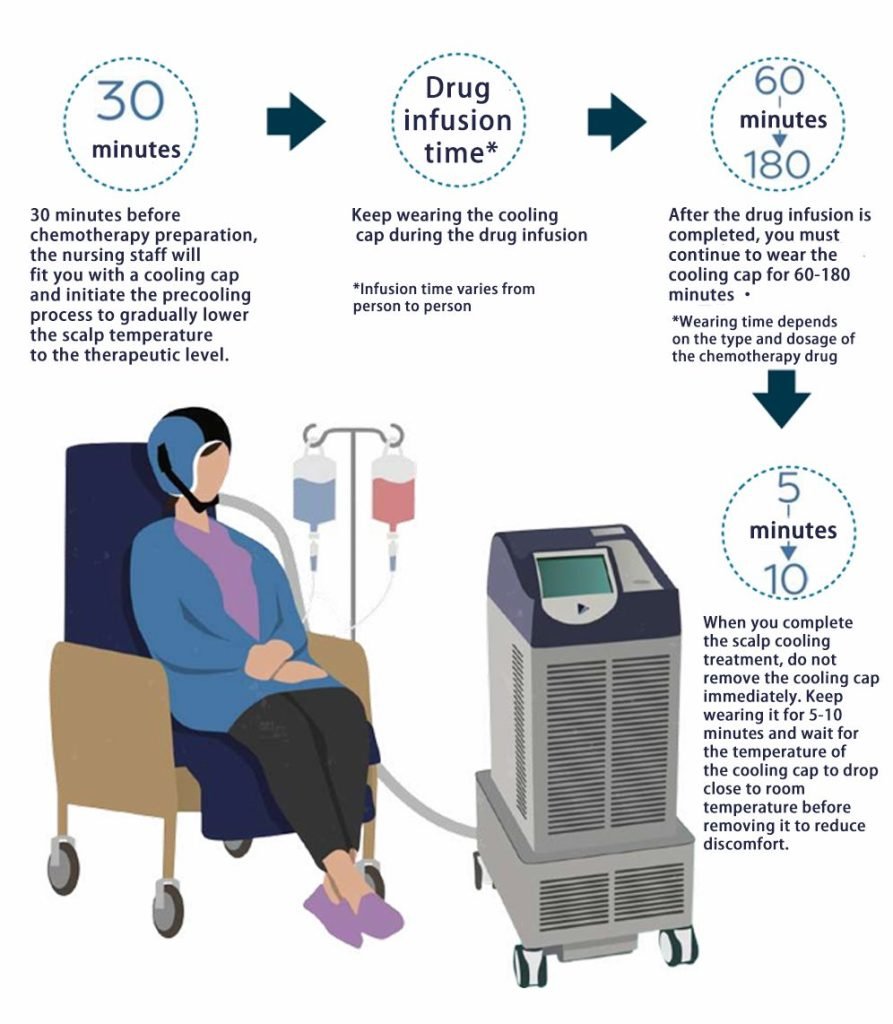
Scalp cooling requires a 30-minute pre-infusion cooling time. Following a patient’s infusion, the chemotherapy agent is still active in the patient’s bloodstream. Therefore, the scalp cooling treatment continues for a cycle of post-infusion cooling. Depending on drug and dose, this is typically 60–180 minutes.
Why Scalp Cooling Matters
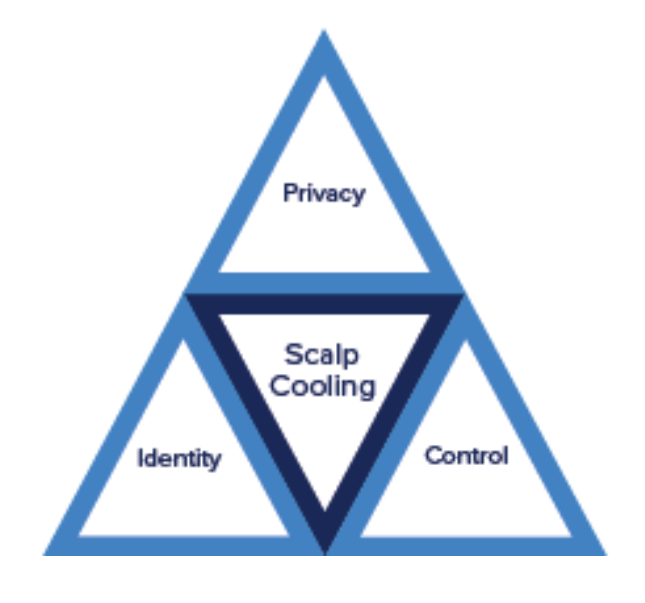
A patient’s hair can be a major part of their identity, and many patients rate hair loss as one of the most devastating side effects of chemotherapy. Chemotherapy-induced alopecia is an unwelcome reminder of disease, one that can negatively affect self-image, confidence, overall sense of well-being and a patient’s attitude toward treatment.
Hair loss is no longer inevitable. The DigniCap Scalp Cooling System is a proven approach to reduce chemotherapy-induced alopecia, used successfully by thousands of patients worldwide to maintain privacy, self-esteem and control during a critical period of treatment.
What are the results of the DigniCap Scalp Cooling treatment?
Pivotal Trial – Clinical Study in Stage I and II Breast Cancer
In 2015, after a rigorous review by the FDA, DigniCap was the first scalp cooling system to receive clearance in the United States. Summary It was concluded that the DigniCap Scalp Cooling System prevented hair loss in 66.3% of patients with breast cancer receiving adjuvant chemotherapy, compared to a control group where all patients experienced significant hair loss. Scalp cooling treatment was well-tolerated and no scalp metastases have been observed.
Anthracyclines
An Italian study published in 2019 assessed the effectiveness of scalp cooling with DigniCap for patients receiving adjuvant chemotherapy with an anthracycline with or without taxanes. DigniCap was able to prevent significant hair loss in 43% of breast cancer patients receiving adjuvant chemotherapy.
Research Overview – Solid Tumors
As published in numerous academic journals, The DigniCap Scalp Cooling System has been shown to be safe and effective in reducing chemotherapy-induced alopecia in cancer patients with solid tumors.
Of 226 patients with various solid tumors and undergoing different chemotherapies 65% showed no visible hair loss.
Research Overview – Scalp Metastases
Metastasis occurs when cancer spreads to other parts of the body. Some patients have asked whether scalp cooling increases the chance of metastases in the scalp.
A study published in 2017 reviewed patients with breast cancer receiving chemotherapy while using scalp cooling for hair preservation and found there was no statistical difference in the incidence of scalp metastasis between patients using scalp cooling vs. no scalp cooling. The study concluded that “based on this extensive review and meta-analysis, scalp cooling is highly unlikely to increase the incidence of scalp metastases in patients with early-stage breast cancer receiving adjuvant chemotherapy.”

What does the treatment feel like?
To help prevent chemotherapy drugs from reaching the hair follicles, DigniCap cools the scalp to approximately 2–6°C. The exact treatment temperature is adjusted based on the patient’s hair thickness. Most patients tolerate scalp cooling with The DigniCap Scalp Cooling System very well. Your doctor can provide a pain reliever if you develop a headache. A warm drink and blanket can also help during treatments.
Who can use DigniCap?
Indication for Use
The DigniCap Scalp Cooling System is indicated to reduce the likelihood of chemotherapy-induced alopecia in cancer patients with solid tumors.
Intended Use
A cooling device intended to reduce or prevent the frequency and severity of alopecia during chemotherapy in which alopecia inducing chemotherapy agents are used.
Contraindications
The use of DigniCap is contraindicated in pediatric patients.
The use of DigniCap is contraindicated in adult patients with:
- Cold sensitivity
- Cold agglutinin disease
- Cryoglobulinemia
- Cryofibrinogenemia
- Cold urticaria
- CNS malignancies (either primary or metastatic)
- Squamous cell carcinoma of the lung
- Small cell carcinoma of the lung
- Cancers of the head and neck
- Skin cancers including melanoma, squamous cell carcinoma, and Merkel cell carcinoma
- Hematological malignancies treated with curative intent by chemotherapy
- Solid tumor malignancies with a high likelihood of metastases in transit
- Patients who are scheduled for bone marrow ablation chemotherapy
- Patients who are scheduled to undergo skull irradiation
- Patients who have previously received skull irradiation
Would Scalp Cooling work for me?
Almost everyone can expect to experience some degree of hair loss during chemotherapy. Scalp cooling is an effective method for reducing the risk of chemotherapy-induced hair loss in men and women with solid tumor cancers. The outcome is dependent on several factors including the chemotherapy regimen, dose, duration of drug infusion, chemotherapy drug metabolism and other medical considerations.
How should I take care of my hair while using DigniCap?
DigniCap offers the chance to minimize chemotherapy induced hair loss for men and women with solid tumor undergoing chemotherapy. Most patients who use DigniCap will see a significant reduction in the amount of hair loss from chemotherapy. However, shedding should be expected and is normal for patients using scalp cooling. The amount of shedding experienced will vary from patient to patient.
Chemotherapy may cause scalp irritation, make the hair dry, brittle, and more difficult to manage. Handling your hair gently during treatment and for several months after you complete your chemotherapy regimen may help reduce the amount of shedding and maintain your hair quality.
Washing Your Hair
- Wash your hair no more than twice per week.
- Wash your hair prior to the scalp cooling/chemotherapy treatments as oily hair may affect thermal contact. Depending on your hair type you may need to use conditioner to avoid tangles and matting. If conditioner is used, rinse thoroughly.
- Wash your hair with lukewarm water and avoid high-pressure shower heads.
- Gently use a detangling brush or comb prior to washing to remove any loose hairs and to prevent tangles or matting.
Styling Your Hair
- Cutting your hair before chemotherapy is not necessary for scalp cooling. If desired, you may trim your hair before treatment.
- Let your hair dry naturally as often as possible. Avoid heat tools such as blow-dryers, curling irons, flat irons and hot rollers.
- Comb your hair with a wide tooth comb or detangling brush twice per day to remove loose hairs and tangles. Always comb or brush your hair before washing to prevent matting.
- Hair accessories that pull on the hair should be avoided. Loose pony tails, buns, braids and soft headbands are acceptable. Hair extensions, tight braids and locs may prevent the cap from achieving a close fit to the scalp. This may affect your results.
- Chemotherapy may cause scalp irritation and make your hair dry, brittle and more difficult to manage. Using natural hair oils to keep the hair soft is recommended. Coconut oil and olive oil are good choices. Avoid putting oil directly on the scalp.
- Avoid direct sunlight on your scalp. Wear a loose-fitting hat or scarf when in the sun for long periods of time.
Avoid Chemicals
- Avoid harsh chemicals that can lead to dry hair, breakage, progressive hair thinning and hair loss.
- Do not use peroxides to color hair, or perms to cure or straighten hair.
- Do not use products containing parabens (such as methylparaben and propylparaben) that are commonly used as preservatives in hair products.
- Do not use sodium laurel sulfate (a foaming agent) which removes natural oils in the hair.
- Avoid silicones that are commonly used to tame or de-frizz the hair.
- Avoid phthalates (such as dimethyl phthalate and diethyl phthalate) often found in hair products.
Hair Shedding
- The majority of hair shedding usually occurs after the first and second infusions, but varies by patient.
- Most patients will experience a heavy shedding phase roughly 14-21 days from the first chemotherapy treatment.
- Do no wash or get your hair wet if it is shedding heavily. Wait for the shedding to slow down, brush it well, and then wash.
- Patients with thick or curly hair may have more shedding at the beginning of chemotherapy because the hair acts as an insulator, making it harder to cool the scalp.
Hair Matting
- Matting is caused by loose hairs getting tangled in the rest of the hair. It is important to comb or brush out any loose hairs to prevent matting.
- If your hair has become matted, lightly wet the matted area with a spray bottle and apply large amounts of condition or hair oil. Gently work through the hair section by section to untangle the matted area.
- Some patients have found it helpful to have a hair stylist, friend or caregiver work through any matted area for them.
Hair Care After Treatment
- It is recommended to continue following the hair care recommendations for 2-3 months after you have finished chemotherapy.
- Once you are back to pre-chemo shedding levels, slowly begin reintroducing your old hair care routine.
- Do not color your hair for 2-3 months after you are finished with chemo.
Do I still need a wig?
The goal of scalp cooling is to reduce overall hair loss so that a wig, cap, scarf or other head covering is not needed.
× 

© 2025 HKIOC. All rights reserved.