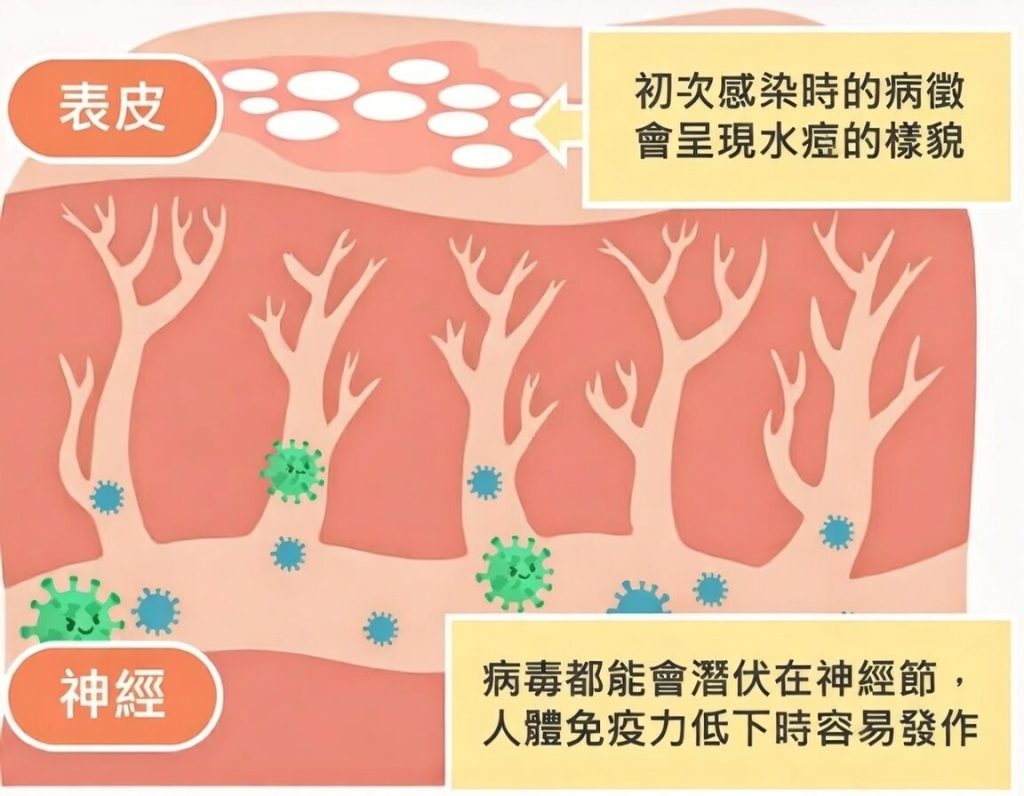
Herpes zoster, commonly known as shingles, is caused by the varicella-zoster virus (VZV), the same virus that causes chickenpox. After the initial infection, the virus remains dormant in nerve ganglia even after recovery. When immunity declines, the dormant virus can reactivate, travel along a nerve to the skin surface, and cause a rash. The rash is often blistering and distributed in a band-like pattern, depending on the affected nerve.
Patients may initially experience abnormal skin sensations, pain, or fever, followed by a rash that may be accompanied by numbness and neuropathic pain. Shingles occurs more often in older adults and people with weaker immunity. Accordingly, cancer patients—whether they are currently receiving treatment or have completed treatment—are a high-risk group, and their risk of complications such as post-herpetic neuralgia is higher than that of the general population.
Vaccination can effectively reduce both the incidence of shingles and the risk of severe disease, and is therefore an important preventive strategy. This page explains the benefits of vaccination, recommended timing, and precautions for patients and families.