• 4/F., Champion Tower, 3 Garden Road, Central, Hong Kong
  • Unit. 1908-09, 19/F, Mira Place Tower A, 132 Nathan Road, Tsim Sha Tsui

Why do cancer patients especially need influenza vaccination?

Influenza, also known as seasonal flu, is an acute respiratory infection caused by influenza viruses. Most healthy individuals recover within a few weeks, but for patients who are undergoing cancer treatment or who have suppressed immune function, influenza may quickly lead to serious complications, hospitalization, or even become life-threatening.

Influenza spreads mainly through droplets and contact. Routine preventive measures include hand hygiene and mask-wearing when appropriate. Vaccination is one of the most effective ways to prevent influenza and its serious consequences. Cancer patients, as well as their family members and caregivers, are advised to receive influenza vaccination every year to establish more comprehensive protection.
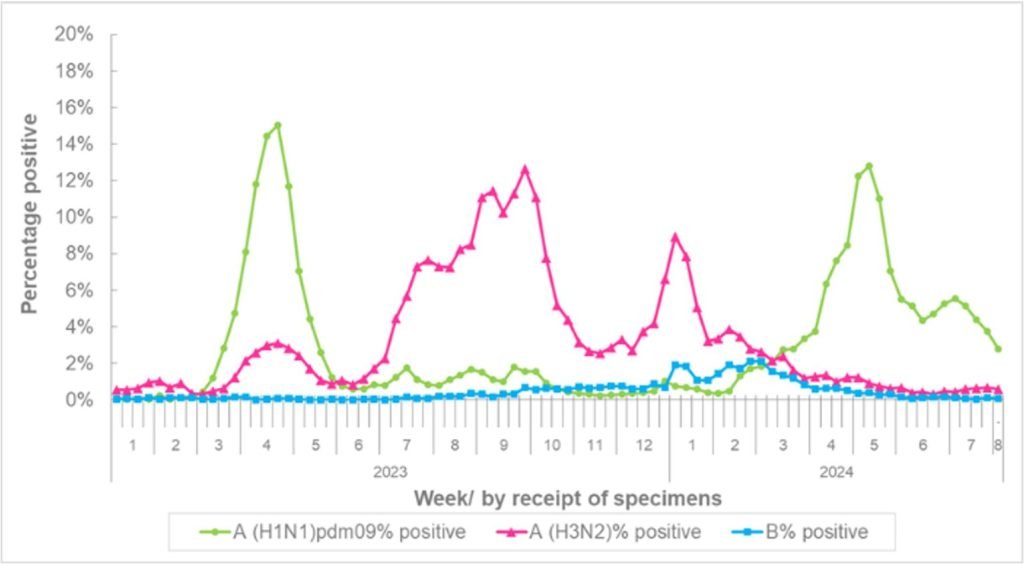
Local circulation of influenza viruses

In Hong Kong, seasonal influenza peaks usually occur from January to March or April, and again from July to August each year. The seasonal influenza viruses known to infect humans are mainly classified into three types: influenza A, influenza B, and influenza C.

Because influenza viruses mutate frequently and new strains regularly emerge, the World Health Organization updates the recommended vaccine composition every year based on global surveillance data. For patients receiving cancer treatment, vaccination with a formulation that matches currently circulating strains is an important step in achieving effective protection.

Figure: Percentage of respiratory specimens tested positive for influenza virus subtypes, January 2023 to August 2024. Extracted from Communicable Diseases Watch (accessed January 2026).

Influenza viruses are highly mutable and highly contagious. Symptoms are generally more severe than those of the common cold, and serious complications are more likely.

ItemCommon ColdInfluenza
CauseVarious viruses (e.g. rhinoviruses, adenoviruses)Influenza viruses
Scope of illnessMainly localized upper respiratory symptomsSystemic illness
OnsetGradual (sometimes relatively sudden)Sudden
Main symptomsUsually milder: sore throat, nasal congestion, runny nose, sneezing, mild coughUsually more severe: high fever, marked muscle aches, headache, extreme fatigue, dry cough, sore throat
FeverUncommon, or only slight feverHigh fever is common (above 38.5°C), often lasting 3–4 days
CourseAbout 2–5 days (most improve within 7 days)About 1–2 weeks (fatigue may last longer)
TransmissionDroplet spread and contact spreadDroplet spread and contact spread
ContagiousnessVariableHighly contagious
ComplicationsUncommon (occasionally otitis media, sinusitis, or mild pneumonia)More common and potentially serious: pneumonia, encephalitis, myocarditis, secondary bacterial infection, etc.

Groups at high risk from influenza

Influenza can affect people of all ages. Once high-risk individuals are infected, they are more likely to develop severe complications such as pneumonia, encephalitis, myocarditis, secondary infections, or neurological manifestations; in severe cases, influenza can be fatal. Extra vigilance is therefore required.

1.Infants and children younger than 5 years

2.Adults aged 65 years or above

3.People with chronic illnesses, including asthma, heart disease, lung disease, diabetes, and chronic kidney disease

4.People with weakened immunity, including patients with cancer

5.Pregnant women

Timing of influenza vaccination and precautions

Except for people with known contraindications, all cancer patients are generally advised to receive influenza vaccination before the winter influenza season, so the body has enough time to build immune protection and strengthen its defense against the virus.

Inactivated VaccineLive Attenuated VaccineRecombinant Vaccine
CompositionKilled virusWeakened live virusVirus surface antigen produced using recombinant technology
CoverageTrivalent or quadrivalentTrivalentTrivalent
RouteIntramuscular or subcutaneous injectionIntranasal sprayIntramuscular injection
Age group6 months of age or above (including people with chronic disease)2–49 years18 years or above (including pregnant women)
ContraindicationsSevere allergic reaction to a previous dose; severe allergy to any vaccine component such as gelatin or antibiotics. Mild egg allergy alone (e.g. urticaria only) is usually not a contraindication, but vaccination should be given in a setting equipped to manage allergic reactions.Pregnancy; immunocompromised individuals (e.g. cancer patients receiving chemotherapy, transplant recipients, people with HIV/AIDS); severe asthma or asthma requiring emergency care/hospitalization in the previous 12 months; children or adolescents taking aspirin or salicylate-containing medicines; severe allergy to vaccine components including gelatin or antibiotics.Severe allergic reaction to a previous dose or to any vaccine component. People with bleeding disorders or those taking anticoagulants can still be vaccinated, but should inform healthcare staff so injection-related precautions can be arranged, such as using a fine needle and applying pressure longer after injection.
Common side effectsInjection-site pain and redness, muscle aches, fatigue, fever, chillsMild nasal congestion or runny nose, low-grade fever, sore throatInjection-site pain and redness, muscle aches, fatigue, fever, chills
Protective effectEffective in preventing influenza and its complications; safety has been widely confirmedEffective in preventing influenza and its complications; safety has been widely confirmedEffective in preventing influenza and its complications; safety has been widely confirmed
RecommendationRecommended for use in Hong Kong by the Scientific Committee on Vaccine Preventable DiseasesRecommended only for appropriate eligible recipientsMay be considered where suitable and available

Frequently Asked Questions (FAQ)

  • 1. Why do cancer patients need influenza vaccination?

    Reduce the risk of severe illness: Patients with cancer often have weakened immunity during treatment, so influenza infection is more likely to lead to pneumonia, sepsis, and other serious complications. Vaccination significantly reduces the risk of severe illness and hospitalization. Maintain treatment continuity: Influenza infection may force delays or interruptions in chemotherapy, radiotherapy, or immunotherapy. Vaccination helps keep cancer treatment on schedule.

  • 2. Which type of influenza vaccine is suitable for cancer patients? Is it safe?

    For most immunocompromised individuals, non-live vaccines are preferred. Inactivated influenza vaccine or recombinant influenza vaccine is generally recommended because both are non-live and have a better safety profile in this setting. The actual vaccine product and vaccination plan should still be confirmed with the treating doctor.

  • 3. What reactions are common after vaccination, and what should I do?

    Most reactions are mild and temporary, and usually resolve within a few days. Common reactions include pain at the injection site, transient fatigue, and low-grade fever. Severe allergic reactions are very rare, but if breathing difficulty, facial swelling, or a severe rash occurs, seek medical attention immediately.

  • 4. I am receiving chemotherapy. Can I still receive influenza vaccination?

    In general, yes. Vaccination is often arranged during a recovery period between chemotherapy cycles or completed before chemotherapy starts. Please discuss this with your treating doctor so the timing can be aligned with your treatment schedule.

  • 5. Will influenza vaccination worsen cancer treatment side effects or interact with medication?

    Current clinical evidence has not shown that influenza vaccination significantly increases the toxicity or adverse effects of chemotherapy or similar treatment. However, each patient is different, so the final decision should be based on professional assessment of your health status and medication regimen.

Our vaccination service and arrangements

Our clinic provides seasonal influenza vaccination in line with recommendations from Hong Kong’s Centre for Health Protection. To ensure vaccination is safe and effective, please inform us of your current cancer treatment status during consultation. Our healthcare team will assess your condition and arrange the most appropriate timing for vaccination. If you have any questions or would like further information, please feel free to consult our healthcare staff.

References

1.Centre for Health Protection. Seasonal Influenza. Accessed January 2026.

2.HKSAR Centre for Health Protection, Scientific Committee on Vaccine Preventable Diseases. Recommendations on Seasonal Influenza Vaccination for the 2020–21 Season in Hong Kong (as of 29 May 2020). Accessed January 2026.

3.Centers for Disease Control and Prevention. Signs and Symptoms of Flu | Influenza (Flu).

4.Drug Office. Seasonal Influenza Vaccination. Accessed January 2026.